
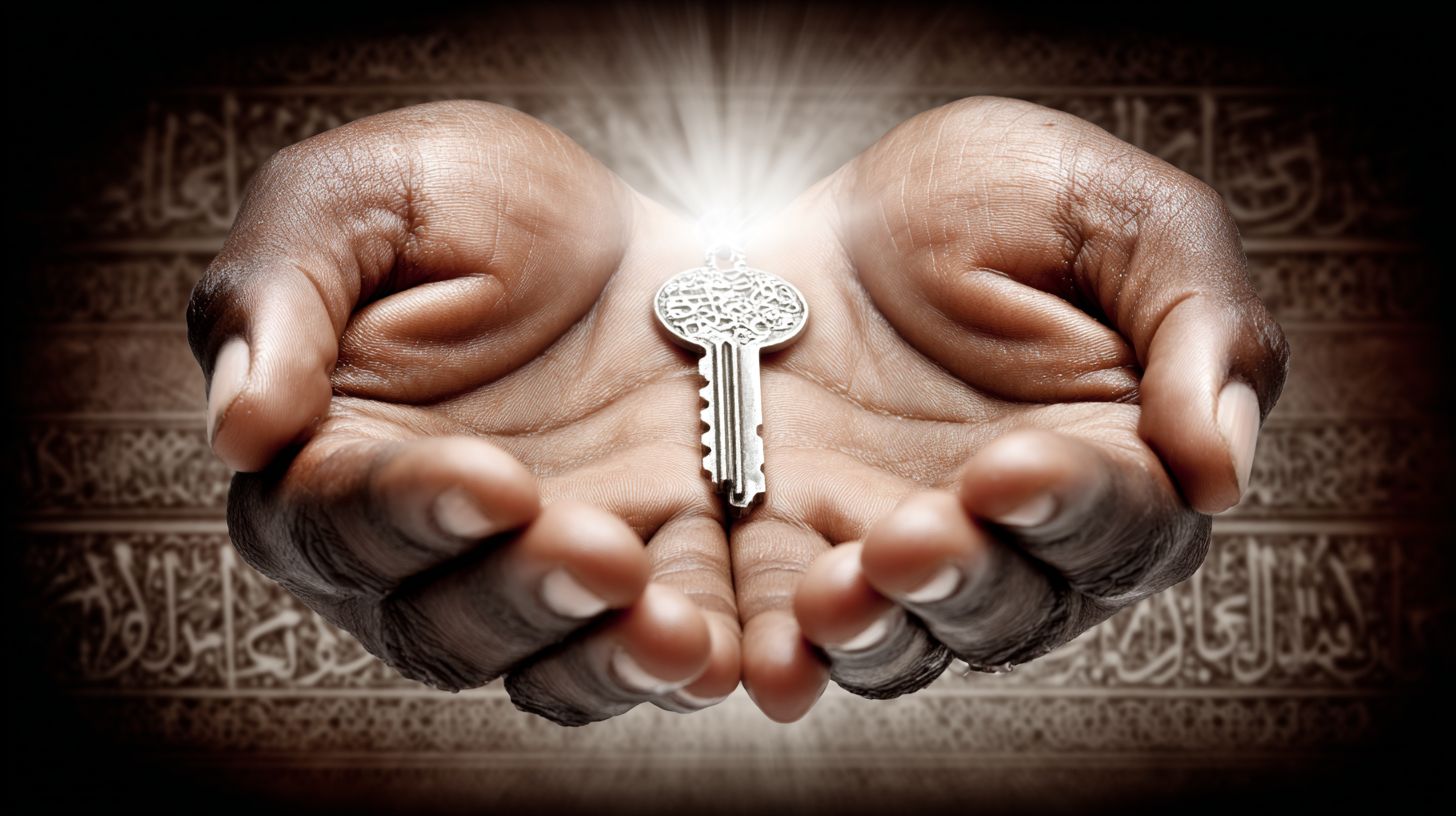
Ever heard someone described as truly trustworthy and wondered what that really means in Islam? Amanah captures that idea of trust, but it goes deeper than just keeping promises.
What Amanah Means in Daily Life

Amanah is that quiet promise you carry around every day. People count on you, Allah holds you to it, and mostly it shows up in the small stuff.
Return the tool you borrowed on the day you said you would. Keep the private story someone told you over coffee to yourself. Stick to the agreement you made at work even when no one is checking. These things don’t look dramatic, but they add up.
The first protects property. The second guards someone’s private words. The third keeps a promise between two people. The Quran lumps them together under the same idea of rights that we owe each other.
Fail at any of them often enough and the pattern is clear. The Prophet put it plainly: repeated betrayal of trust is one of the signs of hypocrisy.
So look at the things sitting on your desk right now. The loan you took. The lease you signed. The wage that lands in your account every month. Amanah turns each of those into something you answer for, not just a transaction you complete.
Definition and Linguistic Roots
The Arabic root a-m-n sits behind words for safety and keeping your word. From that root you get Amanah, a term that points to both the thing someone has left in your hands and the duty that comes with it.
Interesting side note: the same letters give us mu’min, the believer. That link tells you something about where trust sits in the faith.
Someone described as having Amanah is simply someone people can count on. Full stop.
Picture this. Your neighbour agrees to watch your flat while you’re gone. That’s Amanah in its simplest shape.
But the word reaches wider. It covers promising to keep a private chat to yourself, or paying back a loan when you said you would.
The Prophet put it plainly in one Hadith. A real believer is the person whose tongue and hands never harm others, and whose promises you can take at face value.
So the single word Amanah covers both the thing left in your care and the responsibility that sticks to it.
Amanah in the Quran
The term shows up in both early Meccan and later Medinan surahs. That timing tells you something right away—trust sat at the center of the message from day one.
The Quran keeps bringing Amanah back as a marker of real belief.
It shows up in ordinary moments: what you do with money, how you handle a private conversation. The book makes clear that this duty runs first to Allah, then outward to the people near you.
Believers get reminded that the tongue, the hands, even the body itself carry part of the load. So Amanah stretches well past contracts and cash.
Key Quranic Verses

Four verses lay it out plainly.
“Indeed, we offered the Trust to the heavens and the earth and the mountains, and they declined to bear it and feared it; but man undertook to bear it.” (33:72). Picture an employee guarding client records when nobody is looking over their shoulder.
“Allah commands you to render back your Trusts to those to whom they are due.” (4:58). Handing back a rental deposit on time, no arguments, follows this verse to the letter.
“And those who are faithful to their trusts and to their covenants.” (23:8). A contractor finishing work on schedule and under budget lives out the same faithfulness the verse describes.
“If you are on a journey and cannot find a scribe, then take witnesses when you contract with one another.” (2:283). Writing down an agreement turns into more than paperwork—it becomes a way to protect trust.
Prophetic Examples
Prophet Muhammad ﷺ received the title Al-Amin long before revelation because people knew his word was solid.
After the move to Madinah, he sent trusted companions back to Makkah to return everything left in his care. Gold, papers, household items—none of it stayed with him.
Owners expected their things back even though he now lived in another city and carried new dangers. The act showed Amanah does not bend with politics or distance.
Prophet Yusuf offers a different case when he took charge of Egypt’s grain. He weighed, stored, and gave out the harvest carefully so no group suffered during the lean years.
His records and open distribution protected what belonged to everyone, turning an official post into an act of worship through steady Amanah.
Amanah in Hadith Literature
Several hadiths rank the loss of Amanah as a sign of approaching Judgment Day. One narration from Abu Hurayrah mentions people will start treating trust as something ordinary rather than sacred. That’s when faith starts to slip.
The Prophet warned that when Amanah disappears from society, the last hour draws near. He described it as something people pass around like regular conversation instead of guarding it with care. The hadith hits differently when you picture it happening around you right now.
Three practical behaviours show whether someone actually lives by this principle. Arriving on time for appointments shows respect for other people’s schedules and commitments. Accurately reporting expenses keeps financial dealings clean and honest. And keeping confidences protects private information shared in trust.
These actions turn abstract guidance into daily habits. When you keep your word about small things like meeting times and money, larger responsibilities become easier to carry. The opposite sets a pattern where people stop relying on you altogether.
Hadith literature ties Amanah directly to the state of a person’s faith. The Prophet taught that a believer who betrays trust has a piece of their faith missing. This connection makes the concept feel immediate rather than distant or theoretical.
Types of Amanah

Scholars break Amanah into three everyday groups. Each one asks something different from you, and each one carries a reward when you keep it. Miss it and you answer for that on the Day of Judgment.
The categories cover worship, money, and how you deal with people. The Prophet pointed out that neglecting trust is one of the marks of hypocrisy. So the question becomes pretty simple once you look at your own day: how often do you actually protect what was placed in your care?
Religious Trusts
Religious trusts start with the five pillars, done with real care. You guard your prayer times, fast properly in Ramadan, and start planning Hajj once your health and finances allow it.
The rules are clear. Pray each salah in its proper window. Complete the yearly fast. Go for Hajj if you’re able. These duties sit between you and Allah, no one else.
One more thing shows up in worship though. Watch your tongue. Backbiting or harsh words can wipe out the reward you were hoping to earn from the act itself.
Do these things and your faith feels steadier. Skip them and the gaps become obvious later on.
Financial and Material Trusts
Financial Amanah means borrowed cash, leased items, and anything you use at work. The idea is simple: give it back when it’s due and in good shape. The Quran treats this as a right that must be settled.
Keep three habits in mind. Repay loans on the date you agreed to. Track every shared expense. Return rental property the way you found it, with photos as proof.
People notice when money and goods stay safe with you. Once they do, contracts and roles get offered more easily.
Here’s the thing that actually matters. Treat what isn’t yours as heavier than what is. That one mindset sets the trustworthy apart.
Personal and Social Trusts

Personal and social trusts come down to guarding private information and treating others fairly. You hold someone’s story without repeating it. You keep their work opportunities safe from your own bias.
A few situations come up often. A friend tells you their medical results and expects silence. A colleague asks you to keep their promotion plans quiet. You’re leading a meeting and need to avoid favouritism when choices are made.
Each of these tests whether you’ll stay quiet or stay fair. The Prophet warned that spreading secrets ruins trust quicker than most other mistakes. And once that trust breaks, it rarely comes back whole.
People pay attention to how you handle these moments. Your name either comes up the next time someone needs to confide, or it doesn’t.
Practical Applications Today
Try sending a text you know should never be screenshotted. These days that counts just as much as guarding a name in conversation.
You already picked up the core rules from the Quran and Hadith. The real test is how they show up inside the apps you open every hour.
Encrypted messaging apps are an obvious place to start. When someone tells you something private, the same rule the Prophet set down still applies—keep it.
That small choice guards their dignity and your own record later.
Remote work brings its own version of the test. Hours logged honestly matter because the money isn’t yours.
Those fifteen-minute stretches you “forget” to record add up fast, and the habit turns into something you stop noticing until someone calls it out.
Food choices work the same way. Staying within halal limits shows respect for the body you were given, not just rules on a list.
The body itself is the first amanah. Every meal either treats it that way or doesn’t.
Client files need an end point too. Once the job is finished, wiping the drives keeps your word—the info was only borrowed for the task.
Most clients won’t check. Allah still does. Holding on anyway creates the exact kind of trouble you could have avoided with a few clicks.
What Happens When Trust Breaks
Breaching Amanah doesn’t just bruise your reputation here. It carries weight on the Day of Judgment too.
The Prophet described a dishonest trustee as someone who’ll keep hauling that broken promise around until he fixes it. Imagine a loan you were supposed to guard or a rental you agreed to manage, then you pocket what’s not yours. That debt doesn’t just vanish.
After that, folks stop asking you to watch over anything important. Word gets around fast, especially in tight communities. The social fallout stings, sure, but the spiritual cost runs deeper than any hit to your name.
Getting back on track starts with three moves. Return whatever you took or misused, whether that’s money, property, or some position of power. Do it quickly.
Then look the people affected in the eye and apologize, and mean it. After that, spell out publicly that you’re changing course so others can judge for themselves. Most people feel lighter once they stop dodging what they did.
It takes real humility to rebuild Amanah after you’ve dropped it. The path stays open though, if you’re willing to put in the work. The Quran makes clear Allah accepts sincere repentance when you pair it with actually doing right going forward.
Leave a Reply